


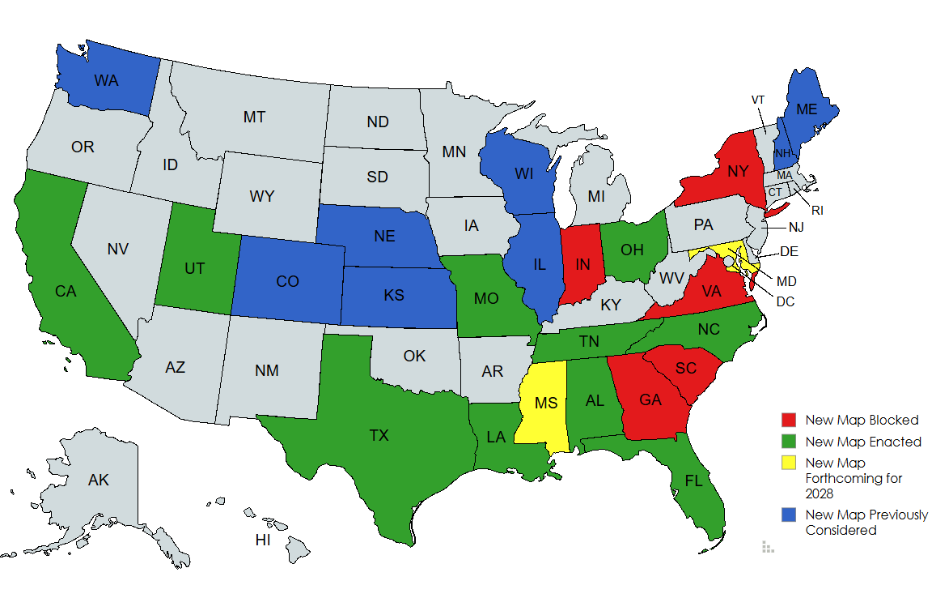
Welcome back to Redistricting Watch, where we break down exactly what’s happening inside statehouses across the country as state legislators redraw electoral districts and work to consolidate power outside of the normal redistricting cycle.
Since the Supreme Court’s April 29 ruling in Louisiana v. Callais, a case concerning the constitutionality of Louisiana’s congressional map and the rights of Black voters across the country to access fair representation in elections, a lot has changed.
The Callais decision struck down Louisiana’s map that gave historic representation to Black Louisianians by providing two majority-Black districts. These districts gave Black voters and other voters of color the opportunity to elect candidates of their choice. Furthermore, the court’s decision eviscerated one of the country’s most sacred civil rights protections, Section 2 of the Voting Rights Act (VRA).
The ruling was a devastating blow, as it now permits states to use partisan gerrymandering as a wholesale excuse to deny Black voters a voice in their government. In other words, under the Supreme Court’s new view of Section 2, a state can, without legal consequence, systematically dilute minority citizens’ voting power. And now, in Callais’ wake, we are already witnessing fair districts across the country vanish as legislatures aim to gut representation for voters of color without checkpoints from the courts.
Need a refresher on why congressional redistricting is so important to your daily life? Here’s a quick catch-up.
Redistricting is the process by which state legislatures or other redistricting bodies redraw electoral district boundaries. Redistricting typically coincides with the release of the U.S. census results, which occurs every 10 years at the beginning of each decade. But right now, some state legislatures are redrawing congressional maps mid-decade — an unusual occurrence. This is called off-cycle redistricting, and it is not normal.
What’s troubling about the off-cycle redistricting happening right now is that legislators are sometimes using the pretext of partisanship to lock in power at the expense of Black voters and other voters of color, which the Constitution forbids. Politicians should not be selecting voters. Voters should choose politicians.
Rules about how voting maps are drawn can impact every part of your life. When courts rule in favor of fair maps, fair access and representation become the standard. Fair maps mean having a say in lower prices at the store, better schools, safer streets, accessible healthcare, and so much more.
LDF is closely tracking additional redistricting developments as legislatures draw, defend, and enact new maps that will affect Black communities in countless ways. Below are state-by-state redistricting updates since our last issue of Redistricting Watch, published on June 25.
Mississippi: NEW MAP FORTHCOMING
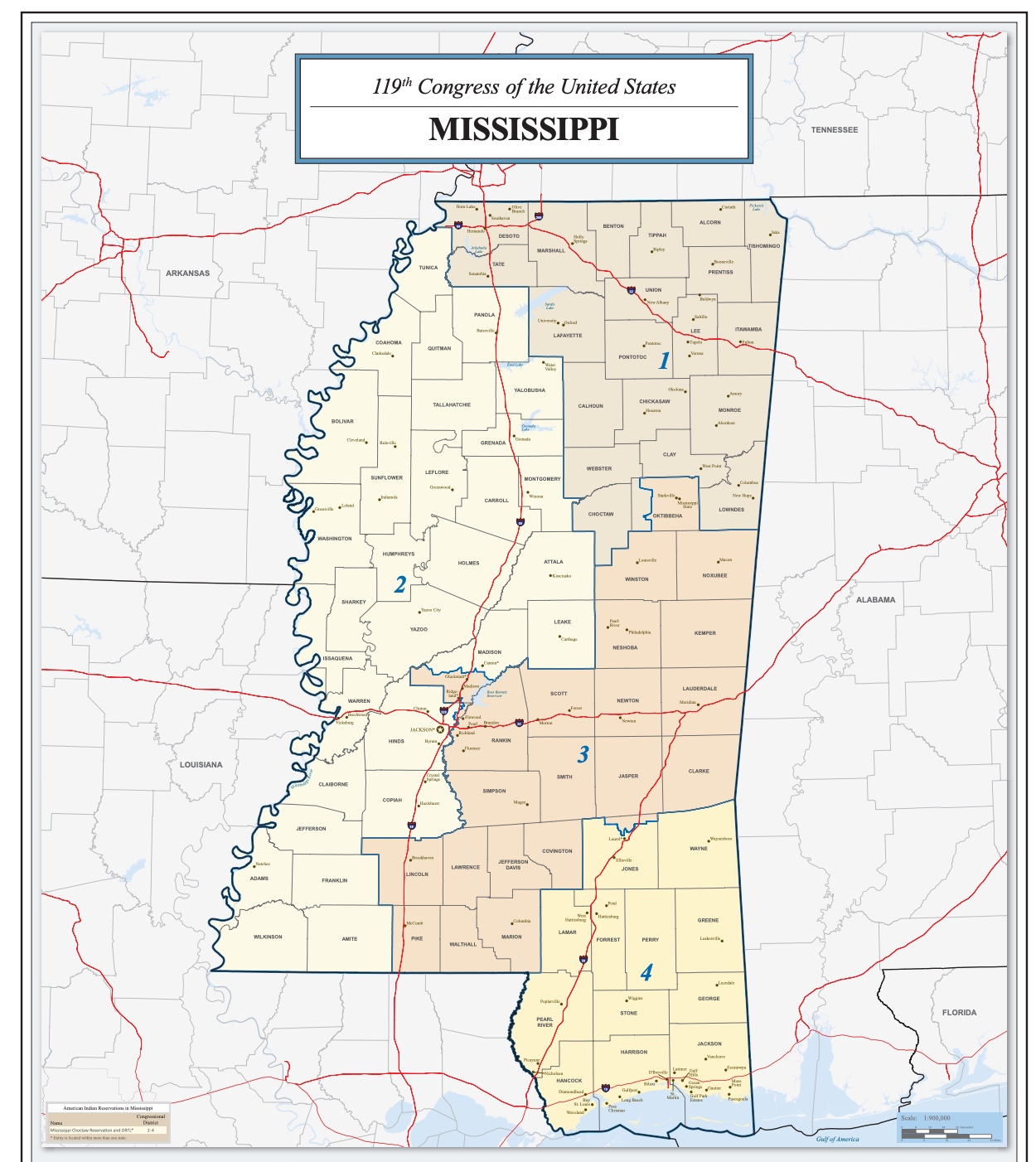
Mississippi’s state legislature is holding eight public hearings across the state to hear from constituents on proposed redistricting plans. The first hearing took place on Aug. 18.
Mississippi’s governor had previously indicated he planned to call a special session to redistrict the state for the 2026 elections, but then quickly rescinded the idea. The current discussions in the legislature will affect the congressional maps for 2028 and beyond.
Mississippi’s current map has four congressional districts.
Over 1.1 million Black people reside in Mississippi, over one-third of the state’s population.
Maryland: CONSTITUTIONAL AMENDMENT ENACTED
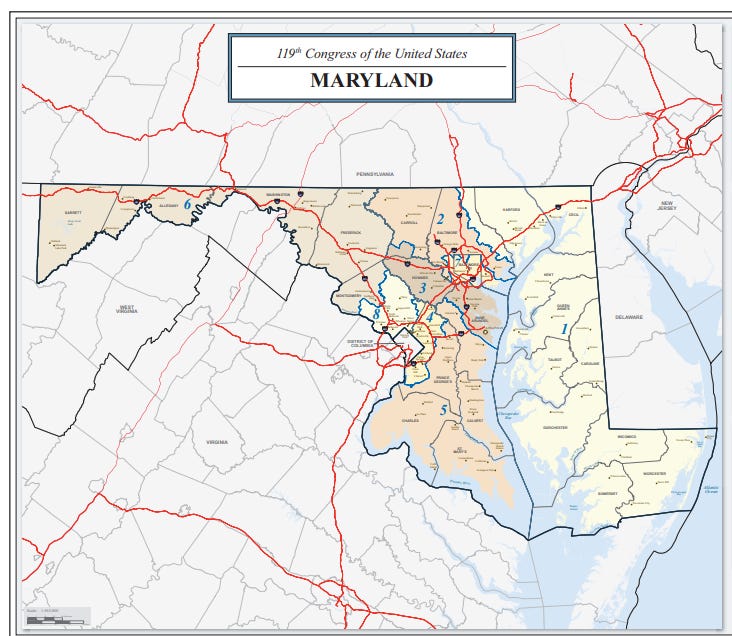
Governor Wes Moore enacted legislation on Aug. 5 to put a constitutional amendment before voters in November to clarify the state’s redistricting process.
The proposed amendment has already been challenged in two separate lawsuits. A Maryland judge in Anne Arundel County recently blocked the amendment from appearing before voters in the November election. But the decision has been appealed to the Maryland Supreme Court.
If the amendment is allowed to go before voters and they approve it, the state legislature could more easily make changes to Maryland’s congressional districts map only, not the state’s legislative districts map.
Governor Moore originally launched a redistricting commission in the fall of 2025 to explore drafting new congressional maps. The commission voted to recommend new congressional maps, which led to the introduction of a redistricting bill in the state legislature, although the bill stalled by the end of the legislative session.
A recent poll by the Institute of Politics at the University of Maryland, Baltimore County, found that 81% of Marylanders polled are not in favor of redistricting for partisan gain.
Maryland’s current map has eight congressional districts.
Black voters make up 33% of Maryland’s eligible voters.
Louisiana: NEW MAP ENACTED
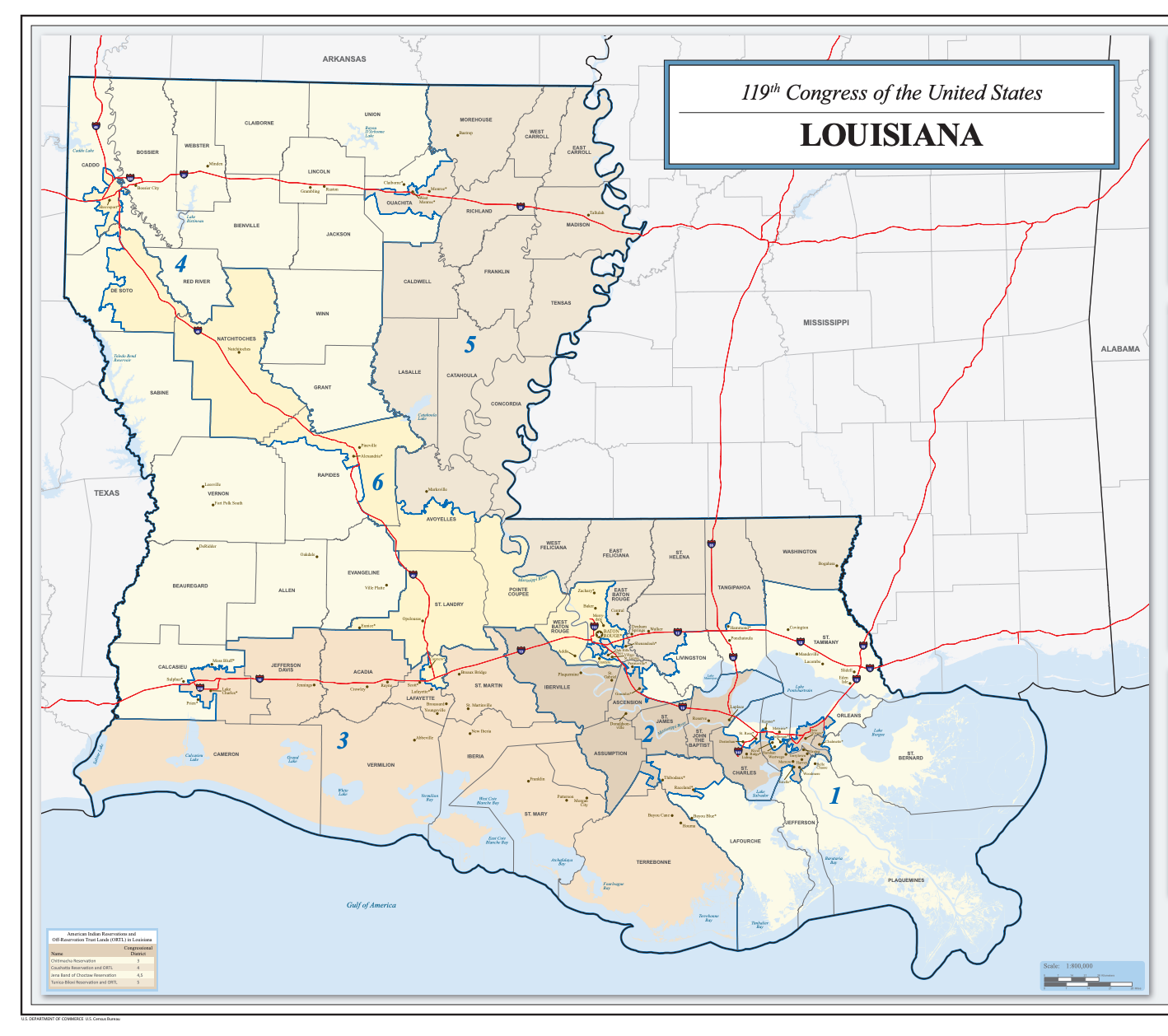
After the Callais ruling struck down Louisiana’s previous congressional map, a new map eliminating one of two majority-Black congressional districts was enacted for the 2026 midterm elections.
However, the Callais plaintiffs are now challenging the sole remaining majority-Black district as a racial gerrymander, threatening to reduce Black Louisianians’ congressional representation from two districts to zero in just one calendar year.
A hearing for this case will take place on Oct. 27. This will occur one week before Louisiana’s “jungle primary” — where all candidates, regardless of party, run against each other at once — during the general election on Nov. 3. This race replaces the primary election that was originally scheduled for May 16.
Louisiana’s current map has six congressional districts.
Over 1.4 million Black people reside in Louisiana, nearly one-third of the state’s population.
Keep an Eye On:
In TENNESSEE, civil and voting rights groups have already filed court challenges to newly enacted discriminatory maps. Although the court recently rejected a request to block the map for an upcoming election, the Legal Defense Fund’s lawsuit with the NAACP challenging Tennessee’s newly enacted congressional map, which intentionally discriminates against Black voters, is still pending before the court.
In MISSOURI, a circuit court judge rejected a referendum petition that sought to put the state’s new congressional map before voters. The decision was appealed to the Missouri Supreme Court, and oral arguments will begin on Sept. 2. Should the referendum be allowed to proceed, it would freeze the use of the new, discriminatory Missouri map and revert to the previous map for the 2026 midterm elections.
How Can You Get Involved
As these redistricting updates demonstrate, state legislatures are already rapidly moving to pass discriminatory maps post-Callais, so it’s more critical than ever to protect voting rights. The Supreme Court’s sustained attack on the VRA demands that people stand together to defend the right to vote, build community power, and continue the work generations before them began. And recent turnout reflects the urgent need to show up at the polls.
Ahead of any election, you should: make sure you’re registered to vote, create a voting plan with friends and family, find your polling place, know what forms of ID are required at the polls in your state, vote early, if you’re able, and research what’s on your ballot. There are local, state, and federal elections happening across the country.
If you’re interested in getting more involved, you can sign up to become an election worker or a nonpartisan volunteer, encourage your workplace to make Election Day a paid holiday, or organize child care for your community so everyone can vote.
And remember to save and share the National Election Protection Hotline number (866-OUR-VOTE). You can call the hotline with voting questions or to report voting access issues.
Previous Updates
All states featured here have undergone redistricting updates since our June 25 issue of Redistricting Watch. For information from previous issues, please check out the Redistricting Watch section on LDF’s Substack page.
On the Horizon
LDF will continue to track updates as other states hurry through redistricting efforts. Lawmakers are continuing to discuss holding special legislative sessions to determine the future of their congressional maps or proposing redistricting measures during current state legislative sessions.
Follow along in the next issue of Redistricting Watch as we update you on redistricting as it happens. In the meantime, for more information about redistricting, please visit LDF’s Redistricting page.
