


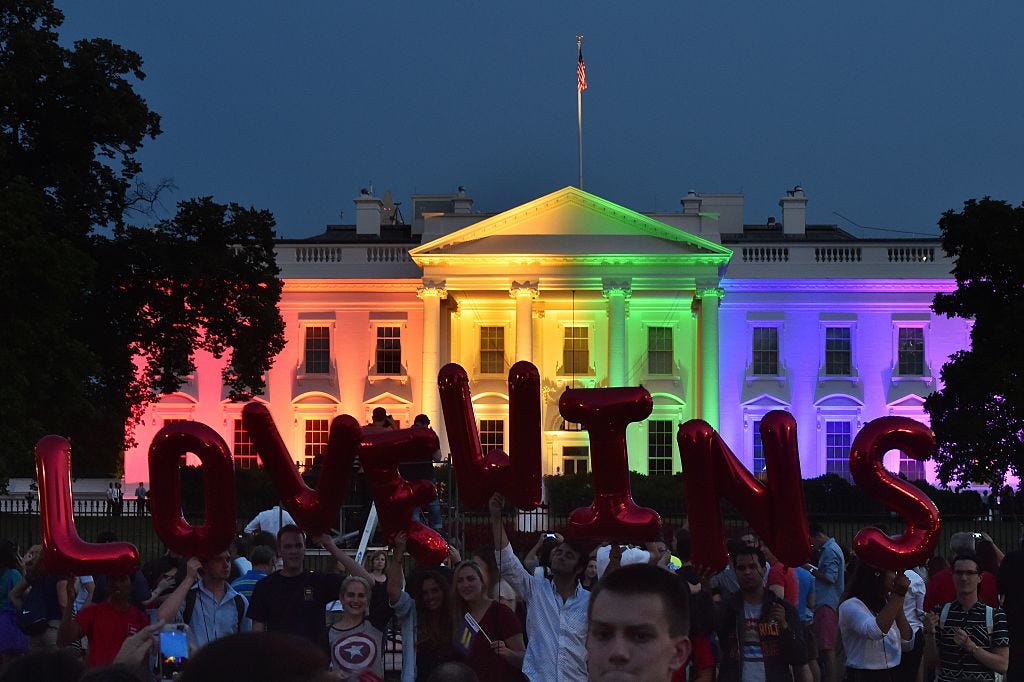
IN BRIEF: It’s been 10 years since the Supreme Court declared that same-sex couples have the right to marry in Obergefell v. Hodges. While the court’s decision signaled a significant turning point in U.S. history, recent regressive policies and court decisions have raised new questions about the future of LGBTQ+ rights throughout the country.
WHY IT MATTERS: As Pride Month comes to an end, what should stand as a monumental celebration of progress is instead marked by unease and political wariness. The Trump administration has issued executive orders banning transgender people from military service, banning programs designed to ensure equity and inclusion for LGBTQ+ communities, and denying the existence and dignity of transgender people. The administration has also moved to defund a suicide prevention hotline established to support LGBTQ+ individuals. Moreover, the Supreme Court recently decided to uphold a state ban against gender-affirming care for transgender youth. This influx of efforts to roll back progress and protections for LGBTQ+ people has some wondering if same-sex marriage will be the next target.
Jim Obergefell, lead plaintiff in the Obergefell v. Hodges case, marked the 10th anniversary of the decision, which fell on June 26, with both pride and unease.
“I’m worried about marriage equality,” he said in a recent interview for USA Today. “If Obergefell is overturned, we go back to a time or a place where a queer couple in Ohio, where I live, might want to get married, but Ohio could refuse to issue a marriage license because Ohio still has a state-level Defense of Marriage Act on the books. Our biggest challenge is making sure we don't lose the progress we have made.”
Indeed, earlier this month, the Southern Baptist Convention passed a resolution calling for laws and court rulings upholding same-sex marriage to be overturned. The Southern Baptist Convention, the largest Protestant denomination in the United States, is a religious organization comprised of over 46,000 Baptist churches and nearly 13 million members. While the group’s resolution has no legal standing, it sends a clear sign that a concerted push to overturn Obergefell may be emerging. Indeed, lawmakers in at least nine states have proposed resolutions or legislation to ban same sex- marriage. Several of these measures specifically call on the Supreme Court to overturn the Obergefell decision.
LDF AT WORK: The Legal Defense Fund (LDF) filed a friend-of-the-court brief in Obergefell, explaining that the arguments advanced against marriage equality were the same as those that were raised — and rejected — by the Supreme Court in Loving v. Virginia. LDF’s brief also noted that bans on same-sex marriage relegate people in the LGBTQ+ community to an unequal and inferior status. LDF’s argument was central to the court’s decision, which noted that the right to personal choice in marriage is “inherent in the concept of individual autonomy.”
Recently, LDF filed an amicus brief in U.S. v. Skrmetti, calling on the Supreme Court to overturn Tennessee's ban on transgender health care services. LDF also sued the Trump administration, challenging its executive order that discriminates against people of color, women, and LGBTQ+ people. The organization will continue its work to ensure the government does not limit your fundamental rights based on who you are. To learn more about LDF’s advocacy and landmark cases defending LGBTQ+ rights, visit here.
 | A guest post by
|